LOGIDOC
One platform for transport and document management
A transport management platform built from real operational pain, validated with three logistics companies across Europe.
COMPANY
LogiDOC
INDUSTRY
Logistics
B2B SaaS
Web app
expertise
UI/UX Design
Product strategy
Informational architecture
TEAM
Adrian Burlau — Product Designer
YEAR
2024
Overview
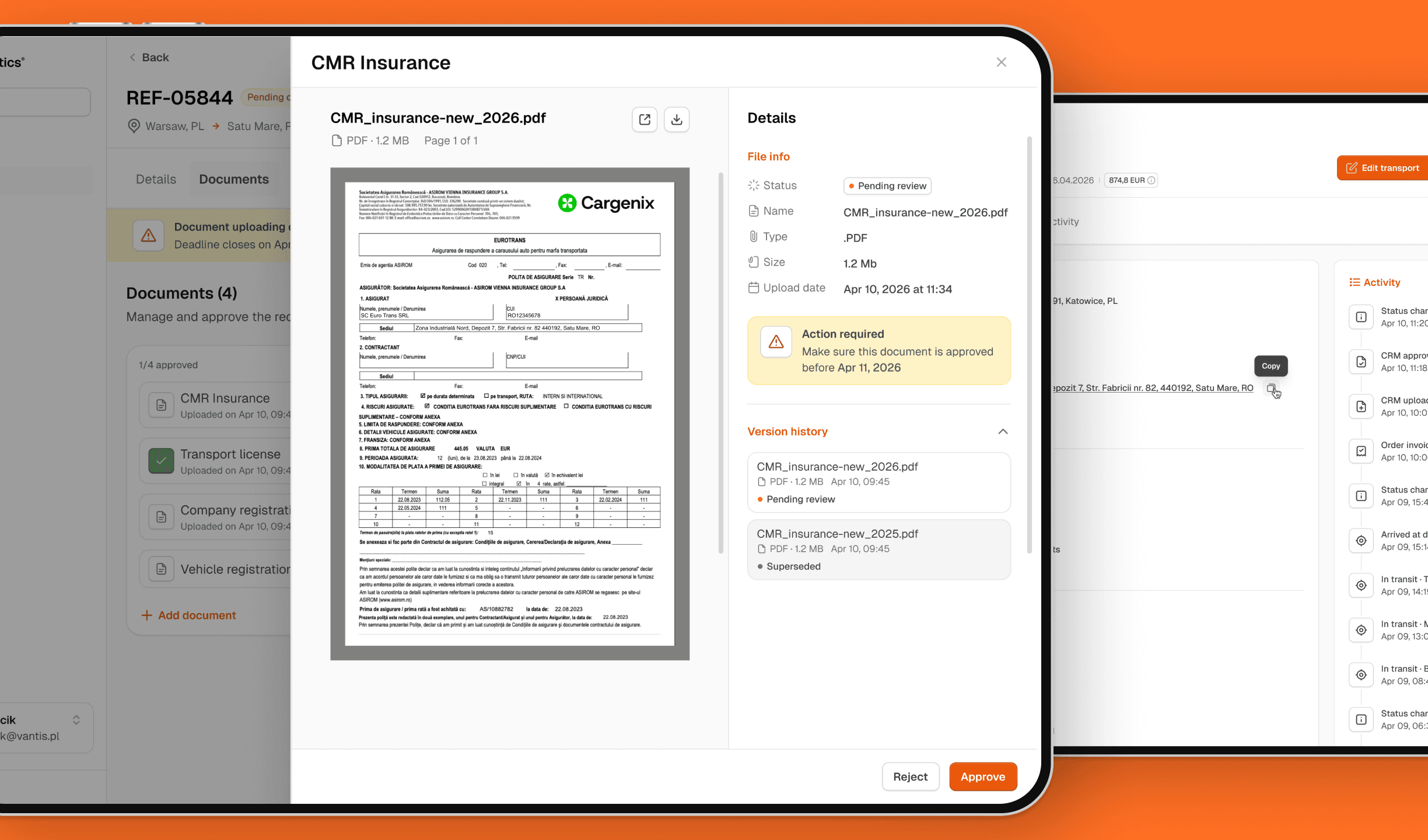
Every transport generates a paper trail like CMRs, invoices, customs declarations, delivery confirmations. In most mid-size logistics operations, that trail lives across email inboxes, WhatsApp threads, and local folders. When something goes wrong, finding what you need is manual, stressful, and slow.
LogiDOC consolidates transport management, document handling, and carrier coordination into one place. Built for teams that have outgrown scattered tools but don't need a full enterprise TMS.
I led this end to end: problem framing, research, product direction, scope definition, UX/UI design, and functional prototype, while validating it with three logistics companies across different scales.
Problem
Logistics teams manage complexity through documents, but the documents themselves are unmanaged. Carriers communicate by WhatsApp, confirmations arrive by email, status updates are ad hoc. Nobody has a single view of a transport and everything attached to it.
The result is operational risk that compounds quietly until it becomes very visible.
RESEARCH
I validated the problem with three logistics companies varying significantly in scale: from a large pan-European operator down to a smaller structured company that works directly with our family business. The variation was intentional.
The findings were consistent across all three. Fragmented communication, unreliable document access, manual processes. What differed was intensity, not nature. This confirmed both the problem and the decision to stay focused, solve the immediate, high-impact issues first and defer everything else.
KEY DECISIONS
Scope: Focused core over broad platform
The research surfaced tempting directions: factory integrations, bulk scheduling, automated routing. All deferred. A focused core: transport management, documents, carrier coordination this delivers clear value and scales outward from there. Choosing what not to build shaped the product as much as anything else.
Carrier portal: no account required
Every company interviewed struggled with carrier coordination. The portal is accessible via a secure token link, no signup, no friction. Carriers upload documents and confirm details directly. A full account is available if they want one, but the default asks nothing of them. A platform carriers have to join before they can act is a platform most carriers will ignore.
Shareable link: Channel-agnostic entry point
Logistics coordination happens on WhatsApp as much as email, especially with spot market bookings and time-sensitive loads. Every transport generates a shareable link that works anywhere. The carrier flow is identical either way; the difference is removing a channel switch at the moment speed matters most.
Leveraging ai
Some carriers simply won't adopt a new platform. The designed solution is an AI agent that reaches out to unresponsive carriers via email or WhatsApp, channels they already use. The carrier responds however they normally would, handles documents their usual way, and never has to access LogiDOC at all. The agent parses the response and maps everything back into the platform automatically.
The logistics team sees it all in context. The carrier changes nothing about how they work. It's the no-friction principle from the carrier portal, pushed one step further.
learnings
Proximity is a research advantage:
Understanding logistics from the inside meant better questions and faster pattern recognition. The discipline was separating personal familiarity from what the product actually needed.
Scope definition is a design decision:
A focused product isn't a limited one, it's a positioned one.
Portfolio projects can carry real stakes:
This started as a design exercise and became something I believe could ship. That shift changed how every decision was made.
LogiDOC user flow of the transport manager
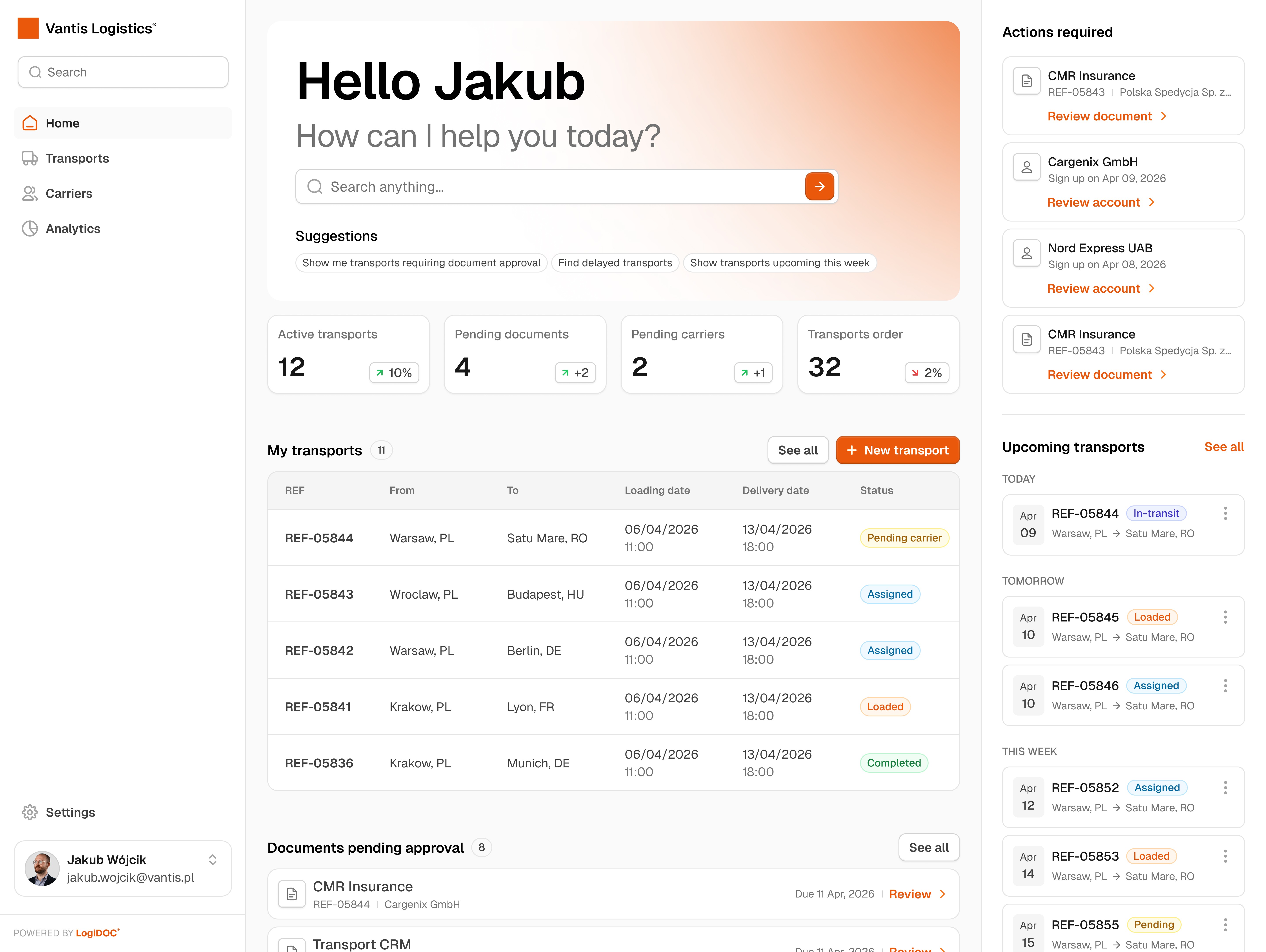
The command center — pending documents, active transports, and required actions in one view.
Video presentation
Four steps from route to carrier assignment, ending with a shareable link ready to send.
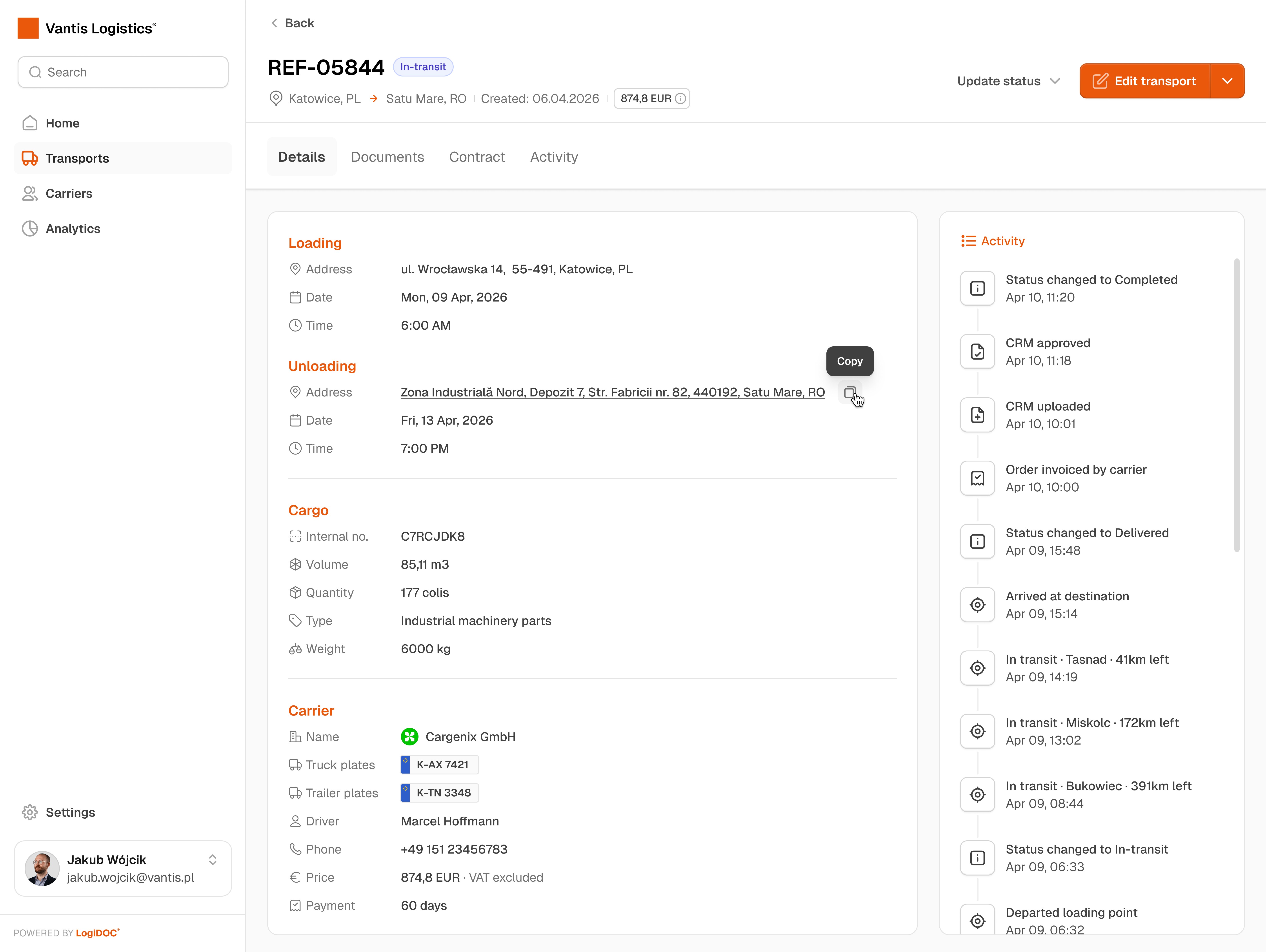
Everything about a transport in one place — route, cargo, carrier, activity, and map.
Video presentation
Truck details, contract signature, and document upload — no account, no friction.
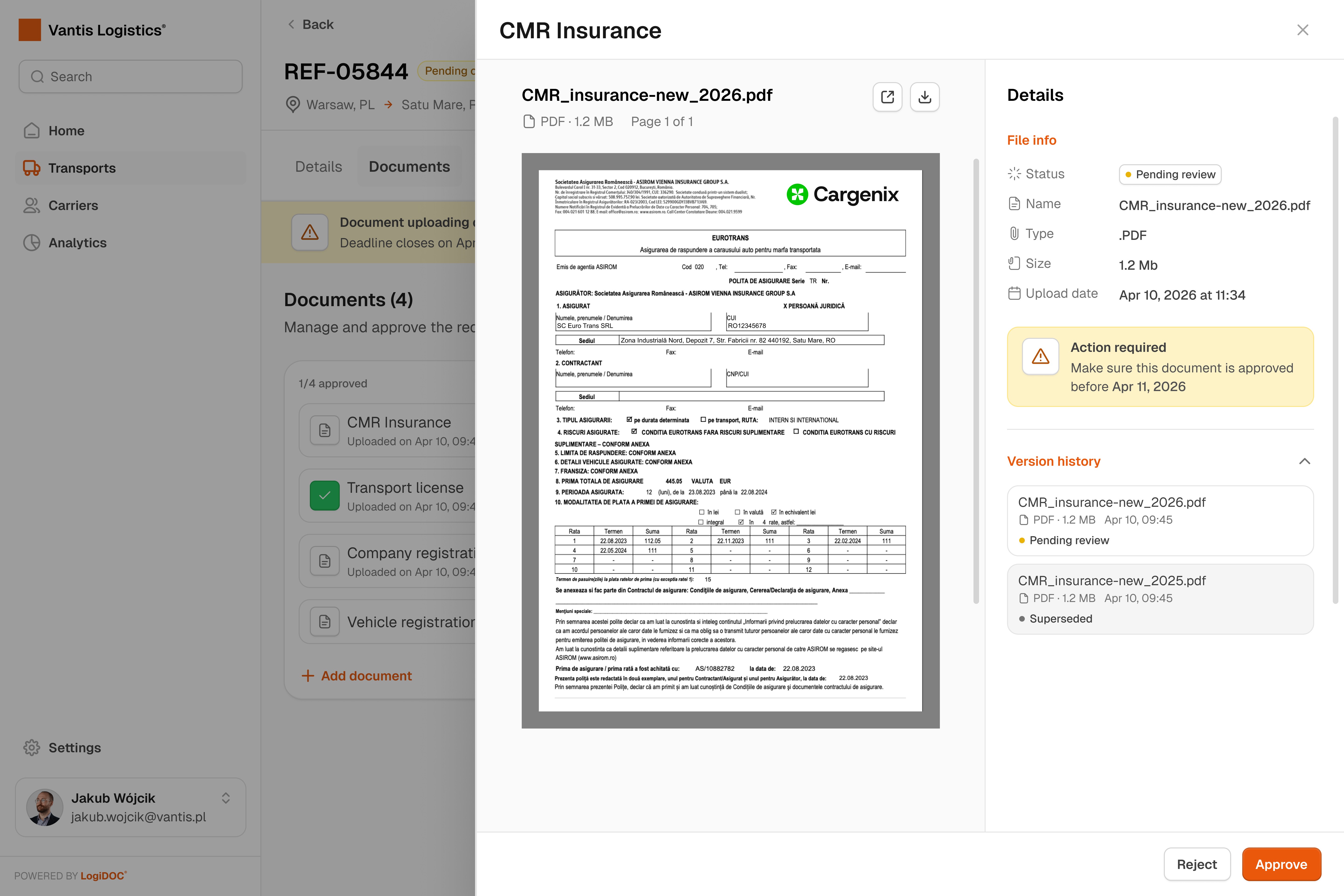
The manager reviews what the carrier submitted — approve or reject with full context.
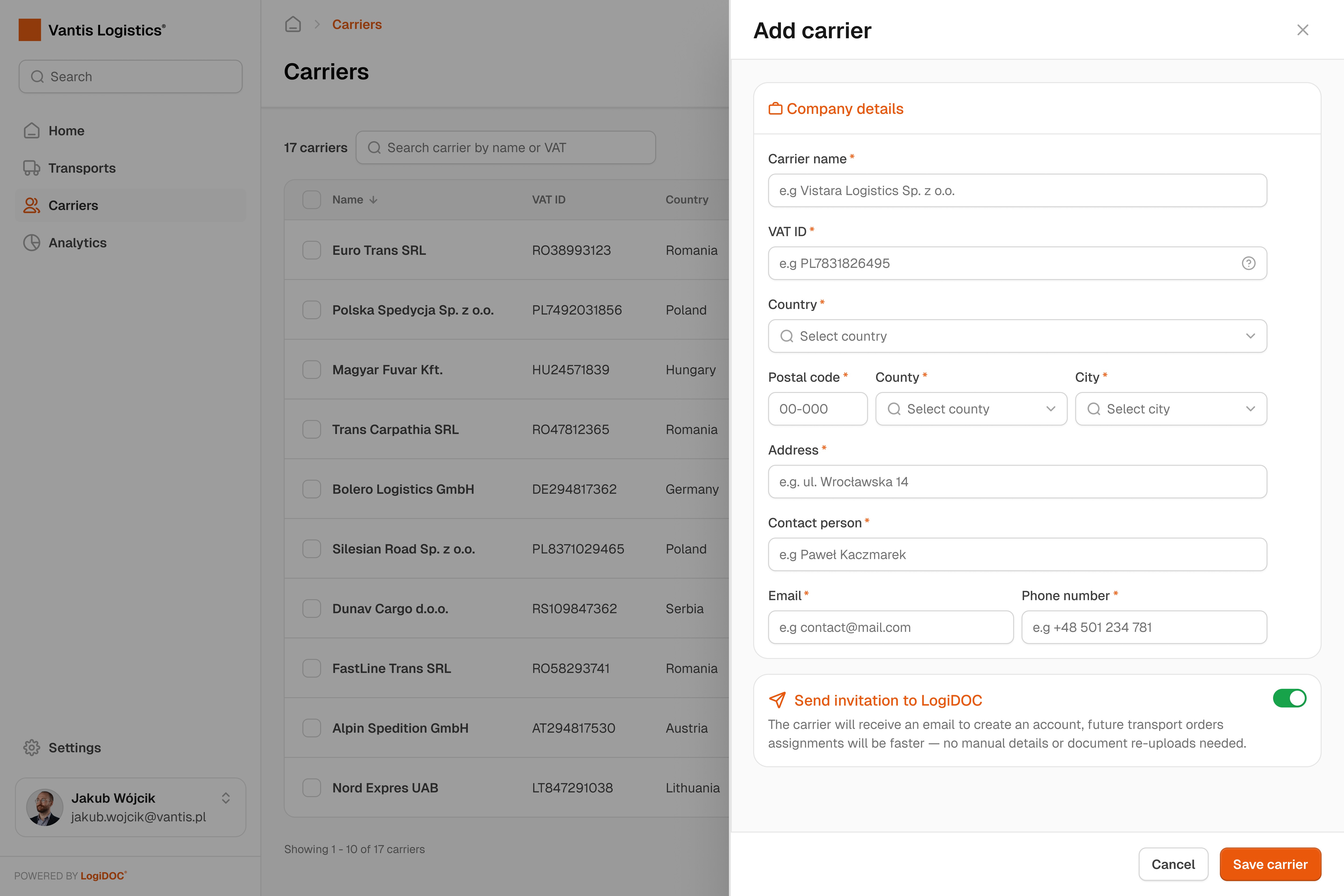
Add a carrier and optionally send them an invitation to create an account on LogiDOC.
Video presentation
Carrier account creation — Fleet setup, document upload, and review in four steps, for carriers who want the full experience.
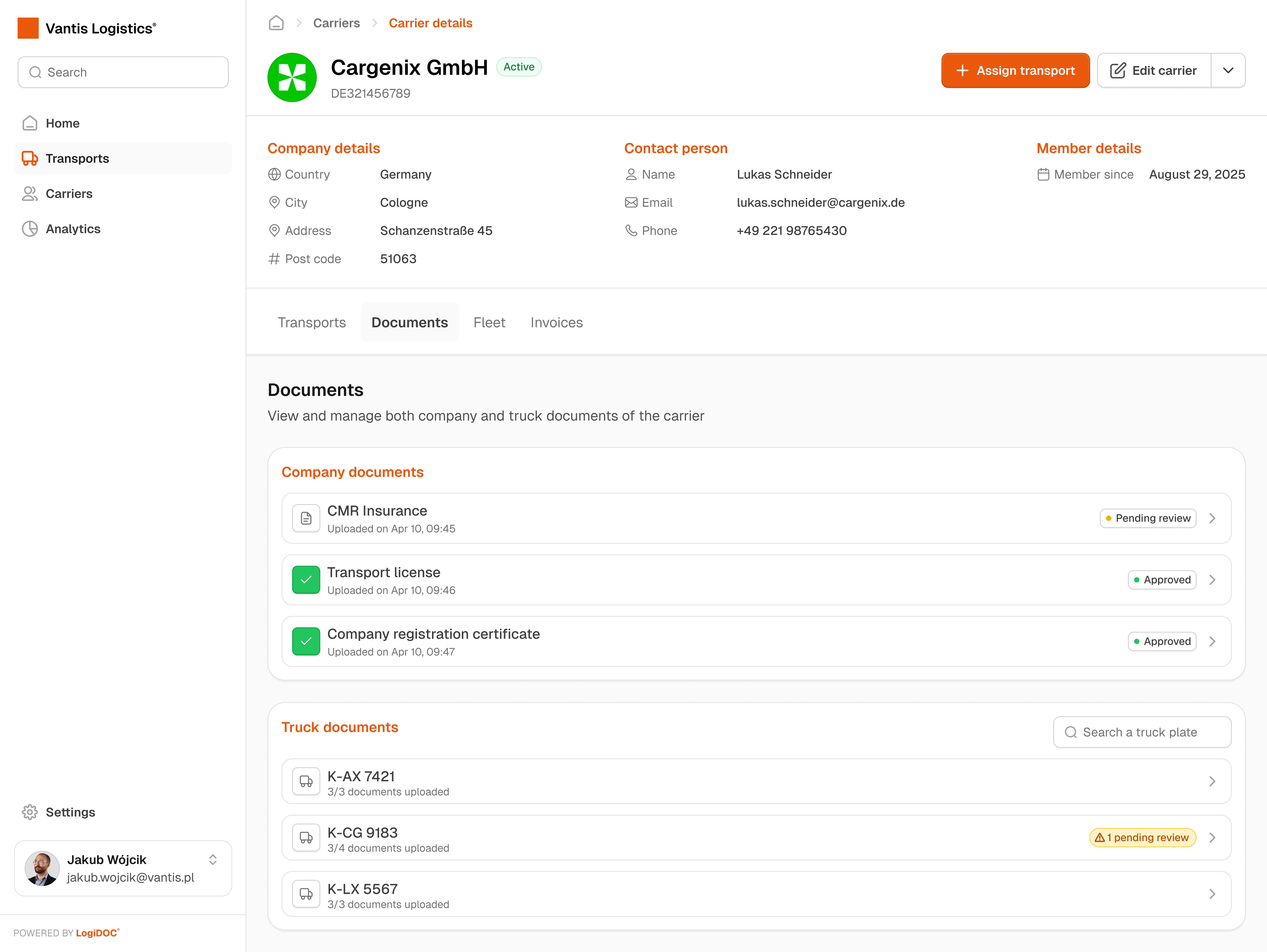
Carrier profile — all transports, company documents, and fleet docs, one place for everything about a carrier.