Dépannevélo
0 → 1 app connecting riders to mechanics
Two-sided marketplace connecting cyclists with nearby mechanics, on demand, from MVP to full product.
COMPANY
Dépannevélo
INDUSTRY
Urban mobility
B2C SaaS
Mobile app
expertise
UI/UX Design
Product strategy
User & market research
TEAM
Cyril Vescan — Product Manager
Adrian Burlau — Product Designer
YEAR
2023
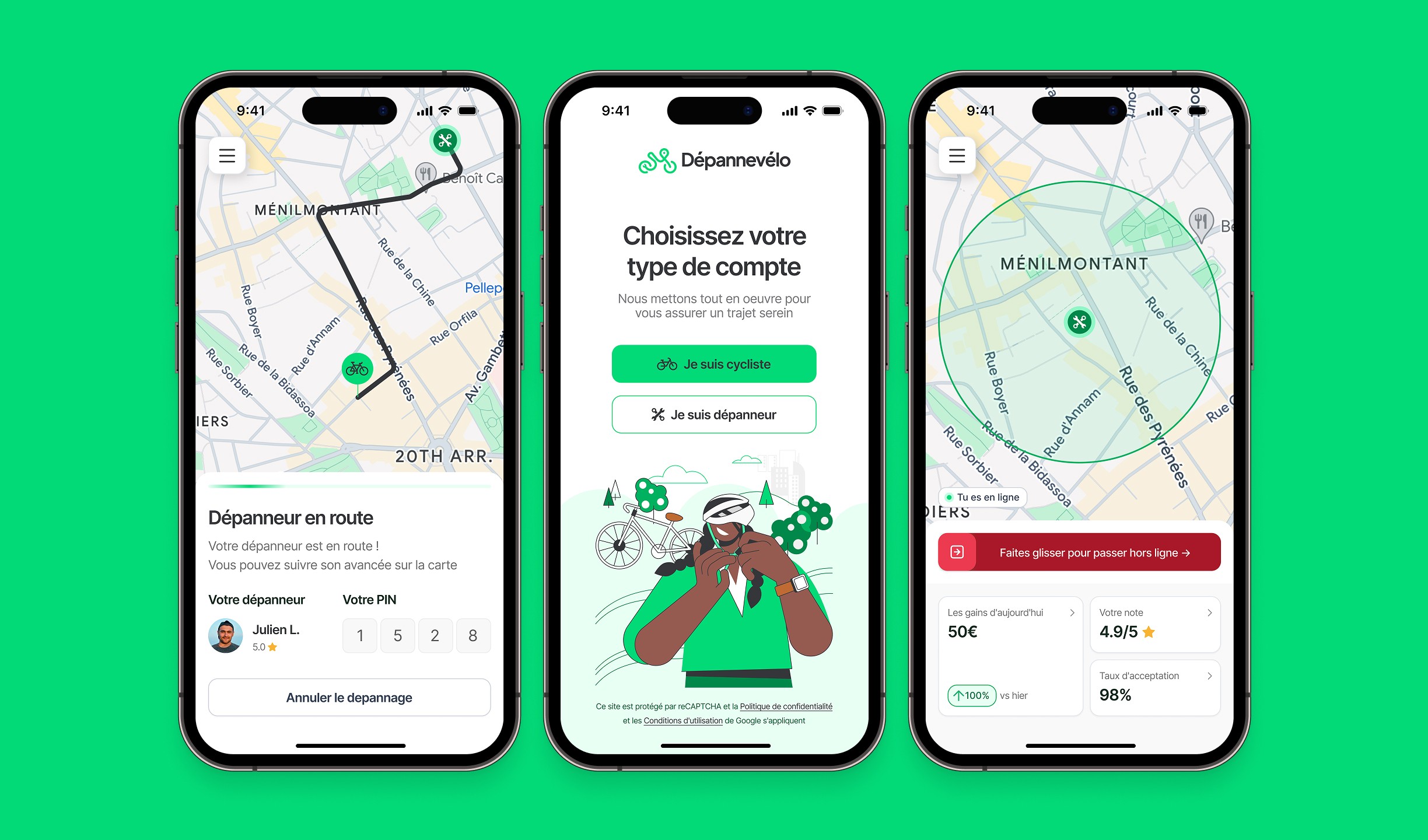
Overview
Dépannevélo is an on-demand bike repair app connecting riders in France with certified mechanics who come to them, wherever they are.
I led the product design at agenceTIZ working on user flows, information architecture, and full UI/UX for both sides of the marketplace. After the MVP shipped and the client stepped back, I continued the project independently, taking it from a functional but incomplete MVP to a fully mapped product.
Problem
France's cycling infrastructure hasn't kept up with its cycling boom. Bike usage nearly doubled between 2019 and 2023, hitting close to 20% of all trips in cities like Strasbourg, Paris, Lyon and Marseille, but getting a bike repaired quickly and reliably is still a painful, unpredictable experience. Dépannevélo exists to close that gap.
CHALLENGE
This is a two-sided marketplace. Both the rider and the mechanic are users, and both have to be served well, or neither comes back.
The rider needs speed and confidence. The mechanic needs clarity and trust. Every design decision had to balance both, because simplifying one side often creates friction on the other. Keeping both mental models alive throughout the entire product was the core design challenge.
Research & ApproacH
With a limited budget, we focused on what was available: market data on cycling growth across French cities, and a close study of ride-sharing apps like Uber, Bolt, FreeNow, that had already solved the two-sided real-time matching problem. That became our mental model: Dépannevélo works like a ride-hailing app, but for bike repair.
We didn't have budget for user interviews. The MVP served as our real-world validation, it launched, attracted users, and proved the demand was real.
Two Worlds, One App
Rider onboarding is fast by design: phone number, bike profile, plan selection, done. They should be in the map in under three minutes, because a rider with a broken bike doesn't have patience for friction.
Mechanic onboarding is deliberately slower: identity documents, driving licence, experience level, profile photo. That friction exists to build trust on the rider side. A rider calling a stranger to fix their bike needs to know that stranger has been vetted.
KEY DECISIONS
The PIN system
When a mechanic arrives, the job doesn't start and no credit is consumed until the rider hands over a unique 4-digit PIN. This prevents ghost completions and creates a clear mutual confirmation moment before anything is committed. The reference was Uber's name-verification system, adapted for a context where the real risk isn't physical safety but financial trust.
Geofenced repair zones
Mechanics work within a defined radius. Riders outside that zone are told immediately not after waiting for a match that won't come. Honest expectations prevent abandonment.
Workshop fallback
When a mechanic can't fix the bike on the street, the app surfaces nearby certified ateliers: distance, hours, rating, rather than ending the session with a dead end. The rider stays in the product even when the job can't be completed on the spot.
MVP → V2
The MVP proved the concept worked. The core loop like request, match, repair functioned. What it lacked was everything around the loop: complete flows, edge cases, error states, account management, cancellation paths, mechanic document management.
V2 wasn't about adding features. It was about completing the product, mapping every state and every decision point so that nothing leads to a dead end. I did it independently, part-time, because I believed the product was worth finishing properly.
Learnings
The gap between something that works and something that feels considered is where most of the real design work lives. The MVP was functional from day one, but without complete flows and a coherent UI, it still felt unfinished. V2 taught me that polish isn't cosmeti, it's the difference between a product people trust and one they tolerate.
Dépannevélo user flots of both rider and mechanic
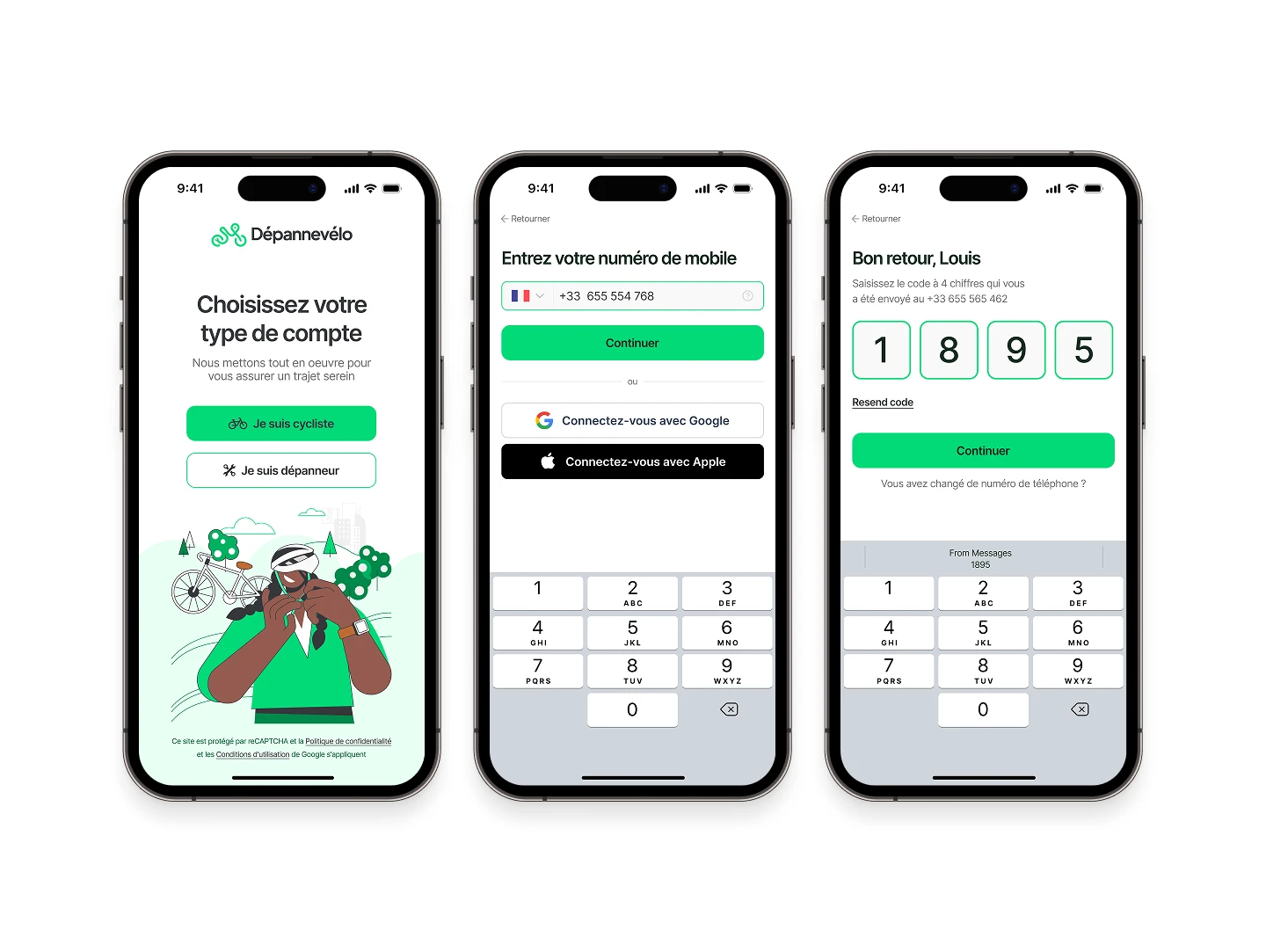
One app, two worlds: Riders and mechanics split the first screen, each routed into a flow built for their needs.
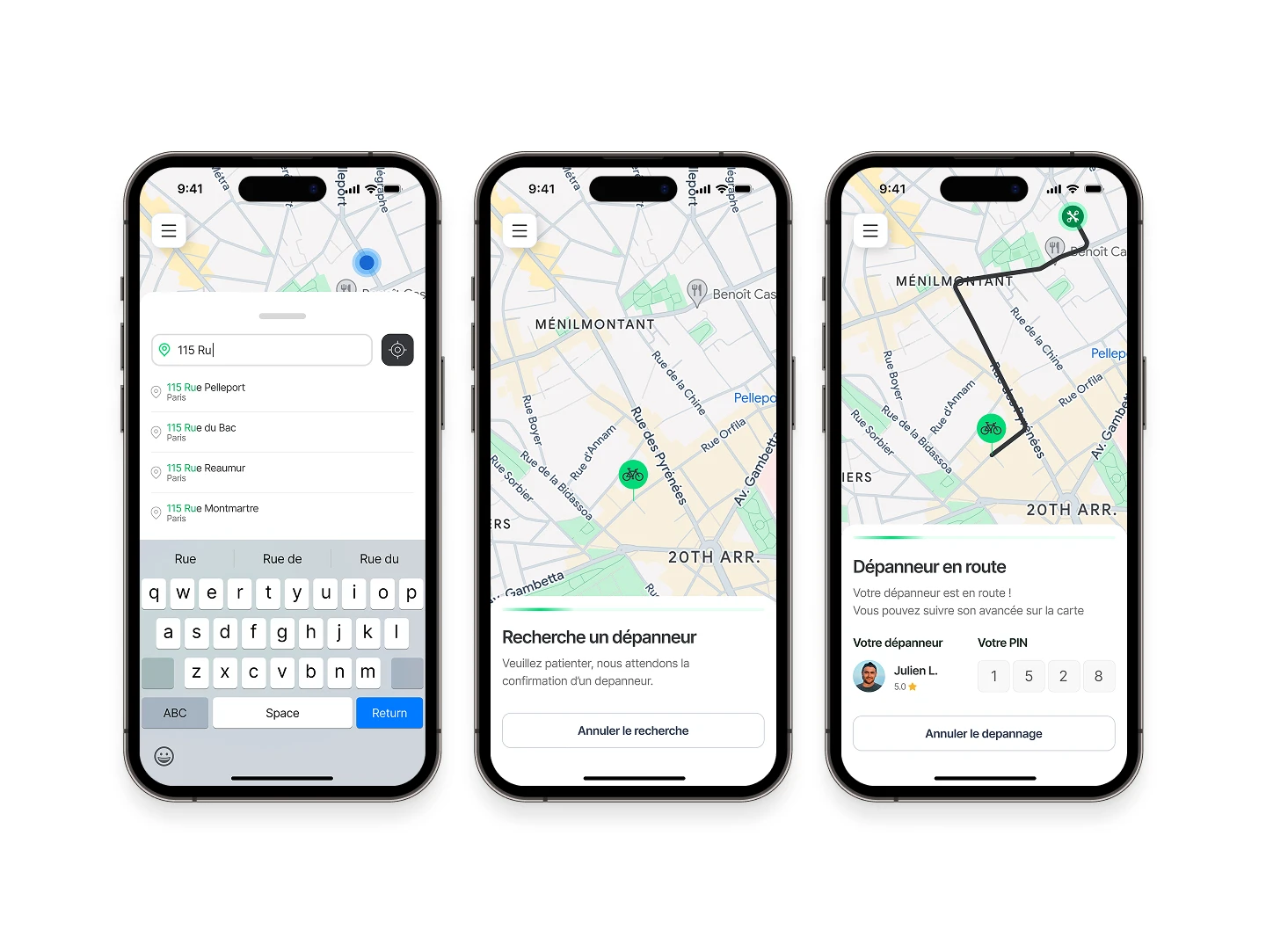
Request a repair: Address, problem, mechanic found. The full rider request loop in under a minute.
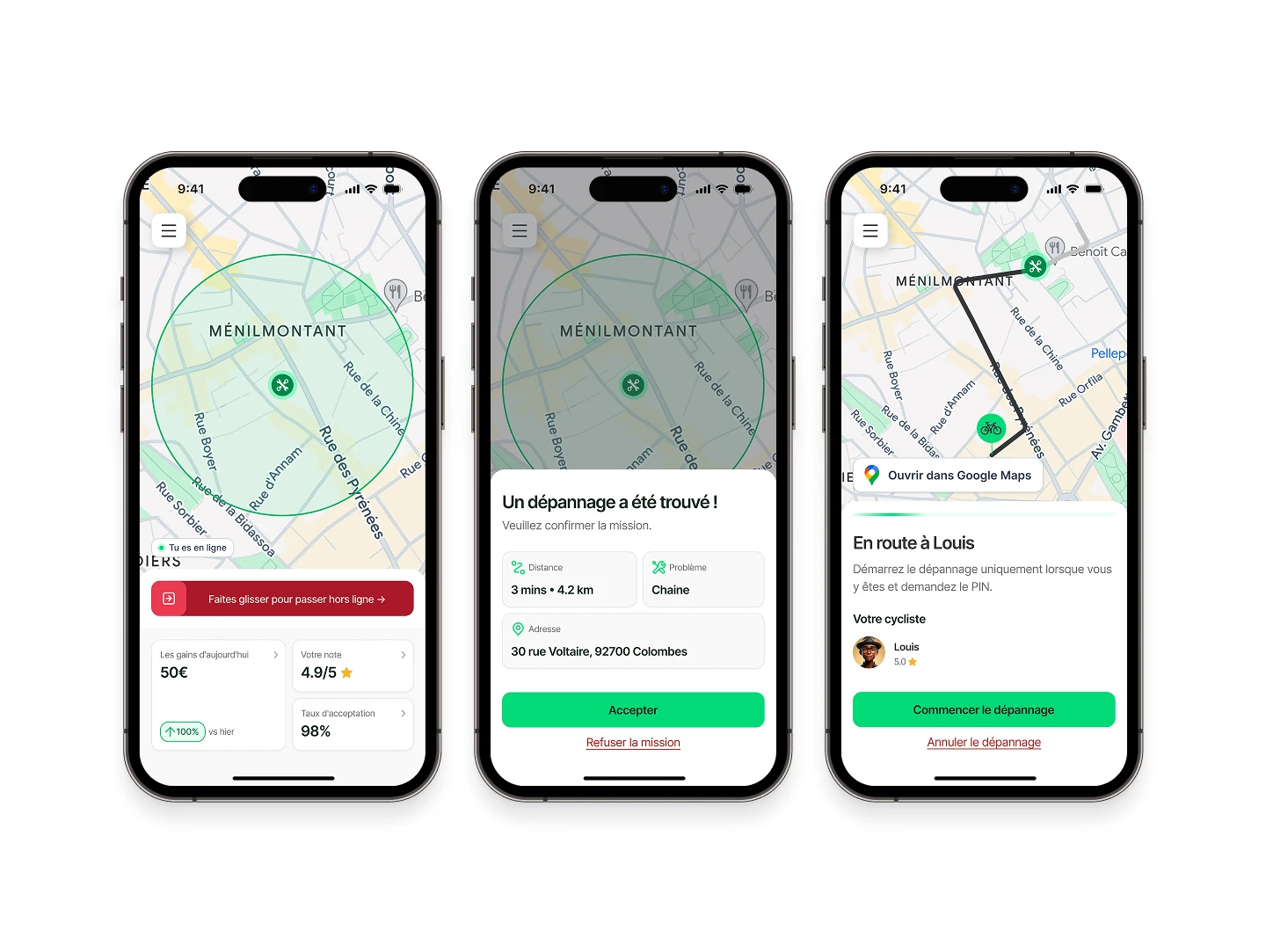
Accept a job: Distance, problem, address. Everything needed to decide in seconds.
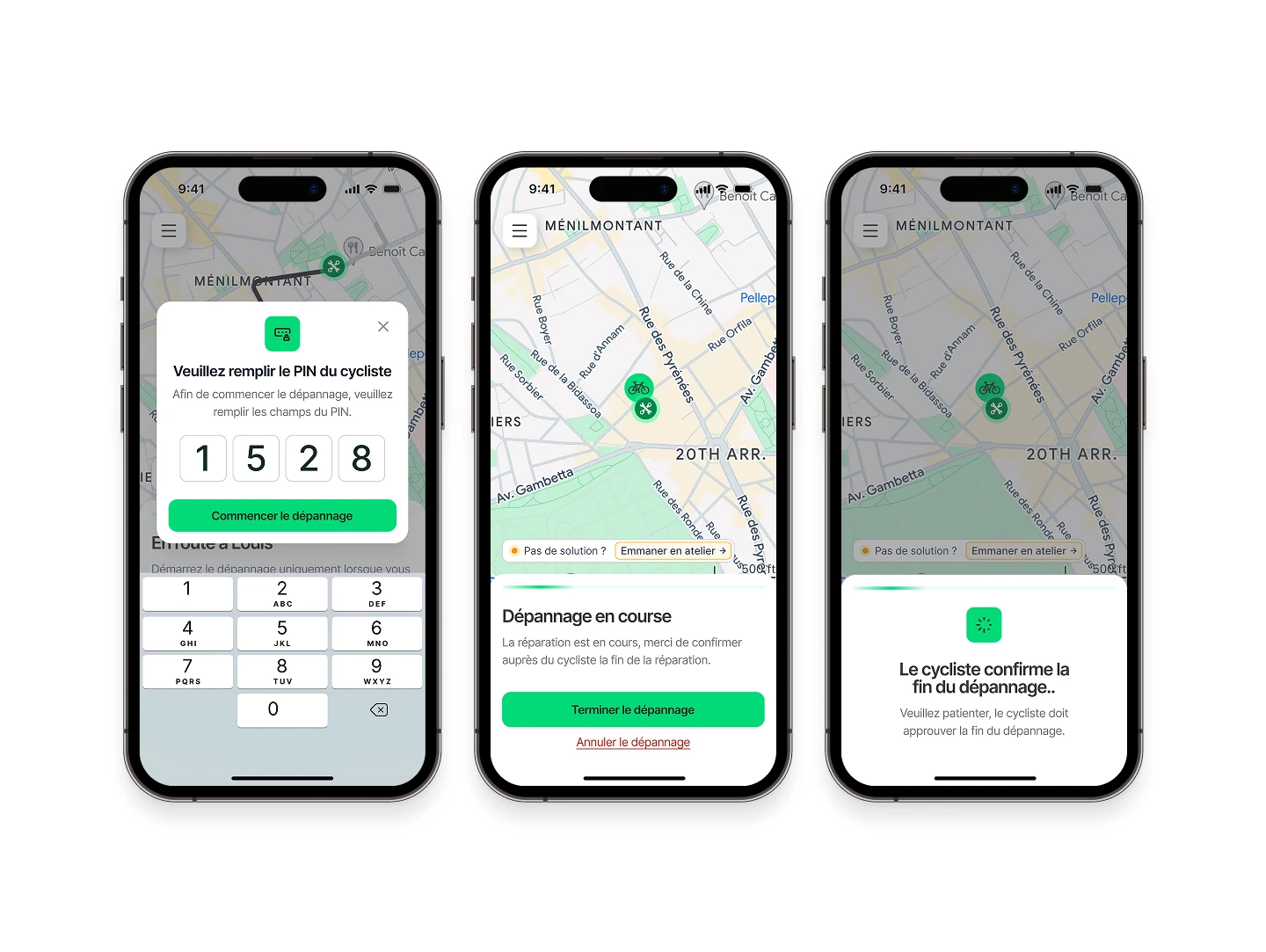
The PIN system: The mechanic enters the rider's PIN to begin the job. Simple mechanism, real trust.
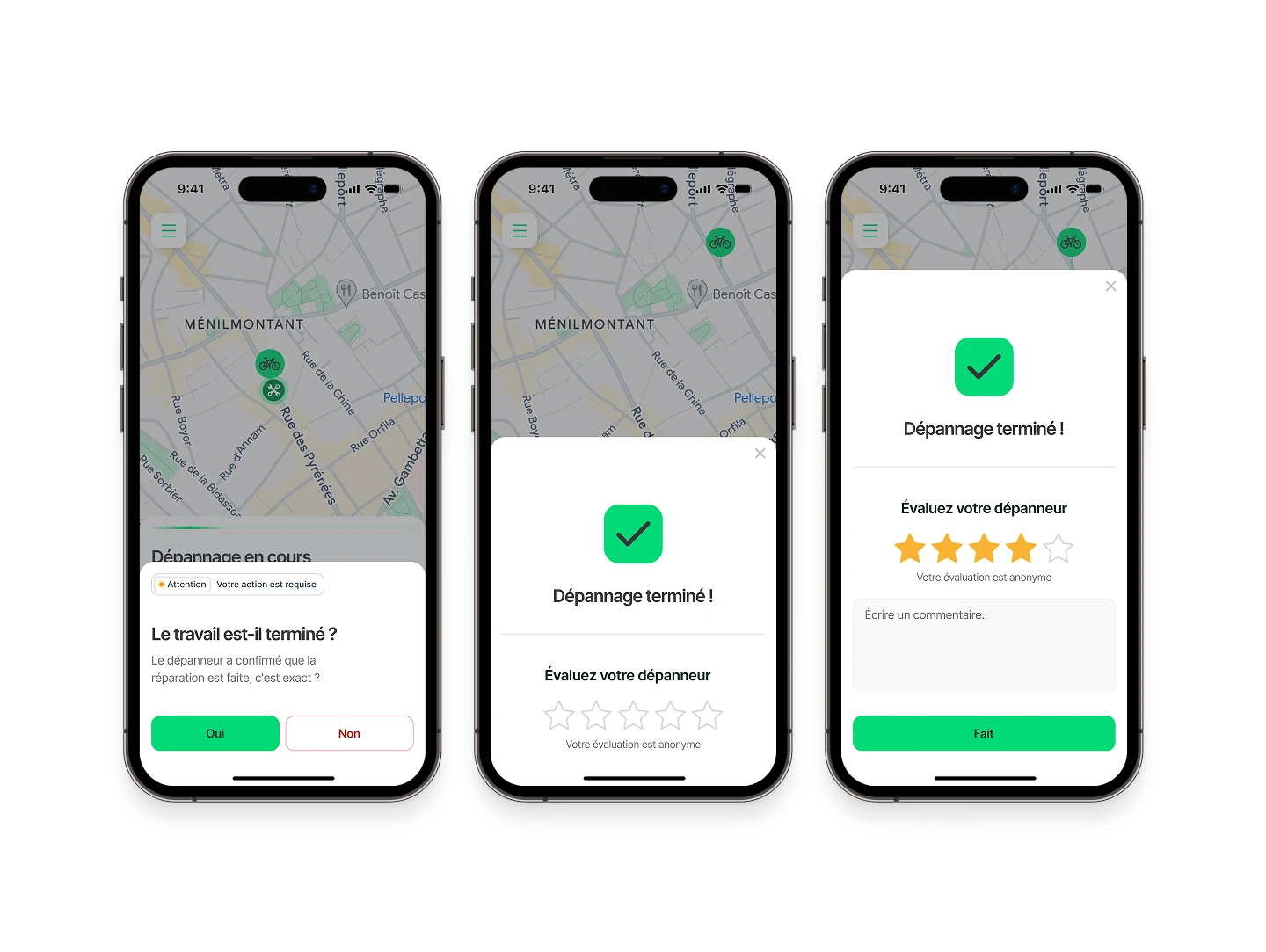
Closing the loop: The rider must confirm that the job is done.
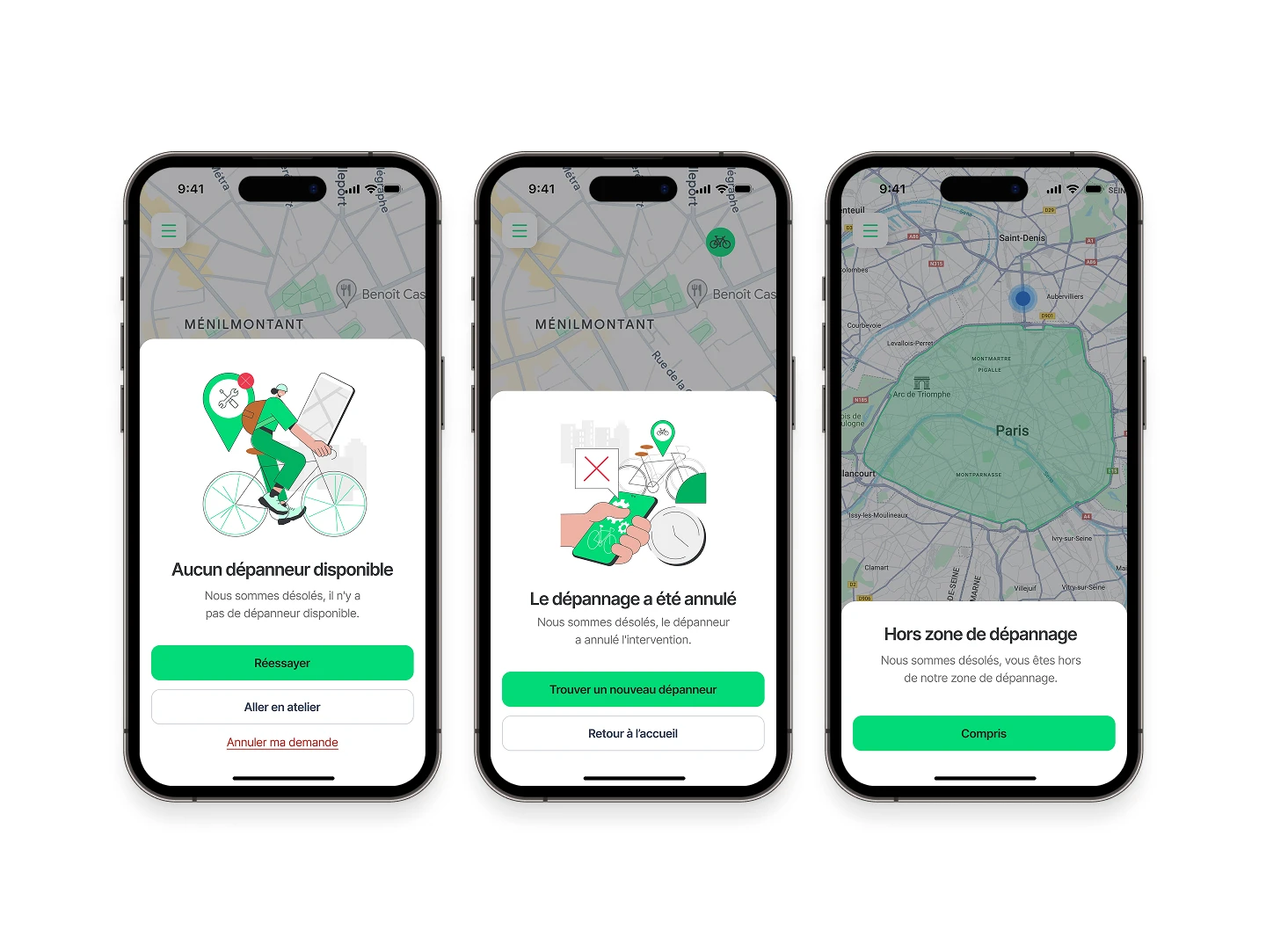
Beyond the happy path: No mechanic available, repair cancelled, out of zone. Every dead end has a clear next step.
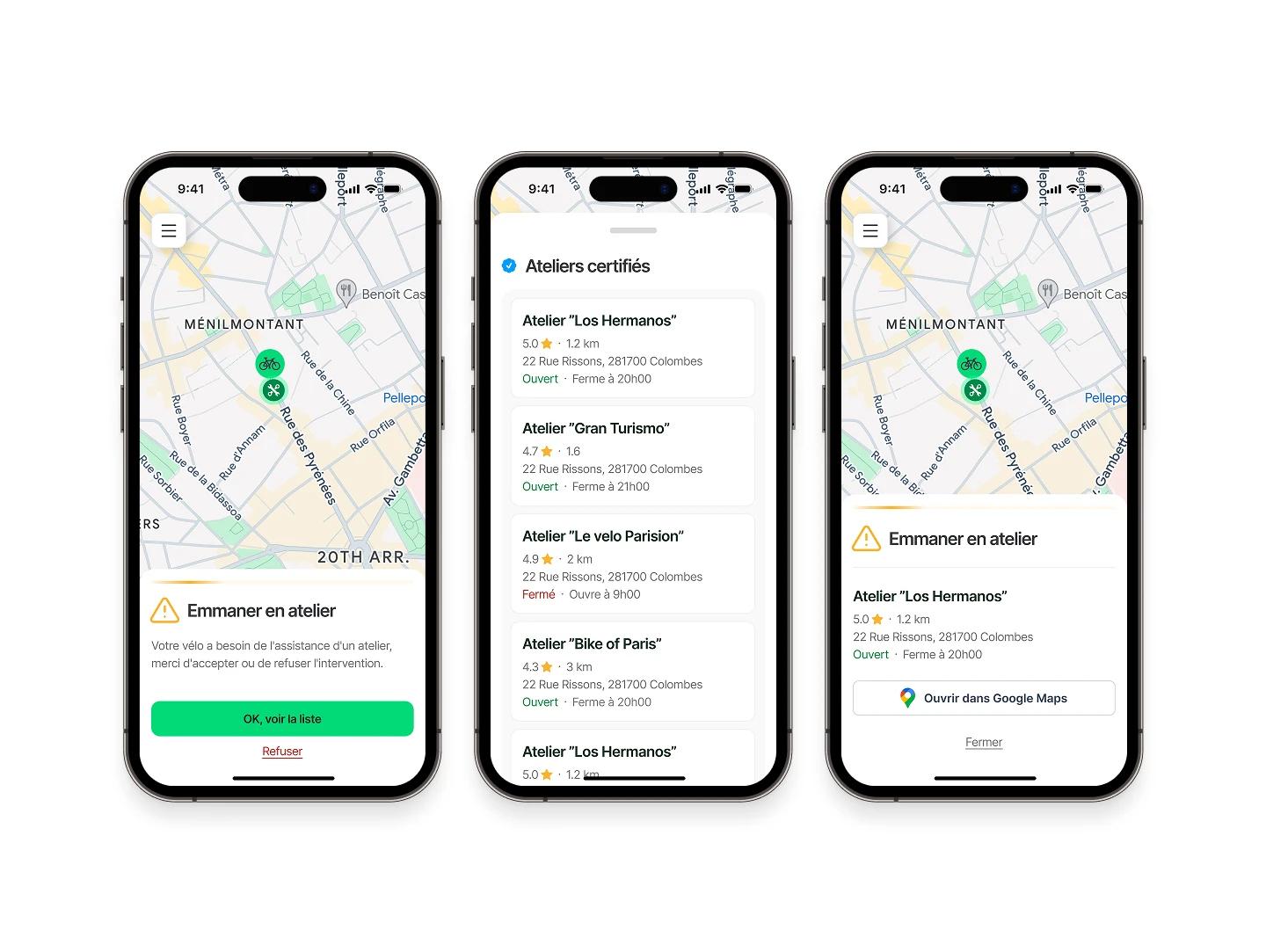
When street repair isn't enough: The mechanic triggers a workshop referral. The rider picks from a list of nearby certified ateliers.
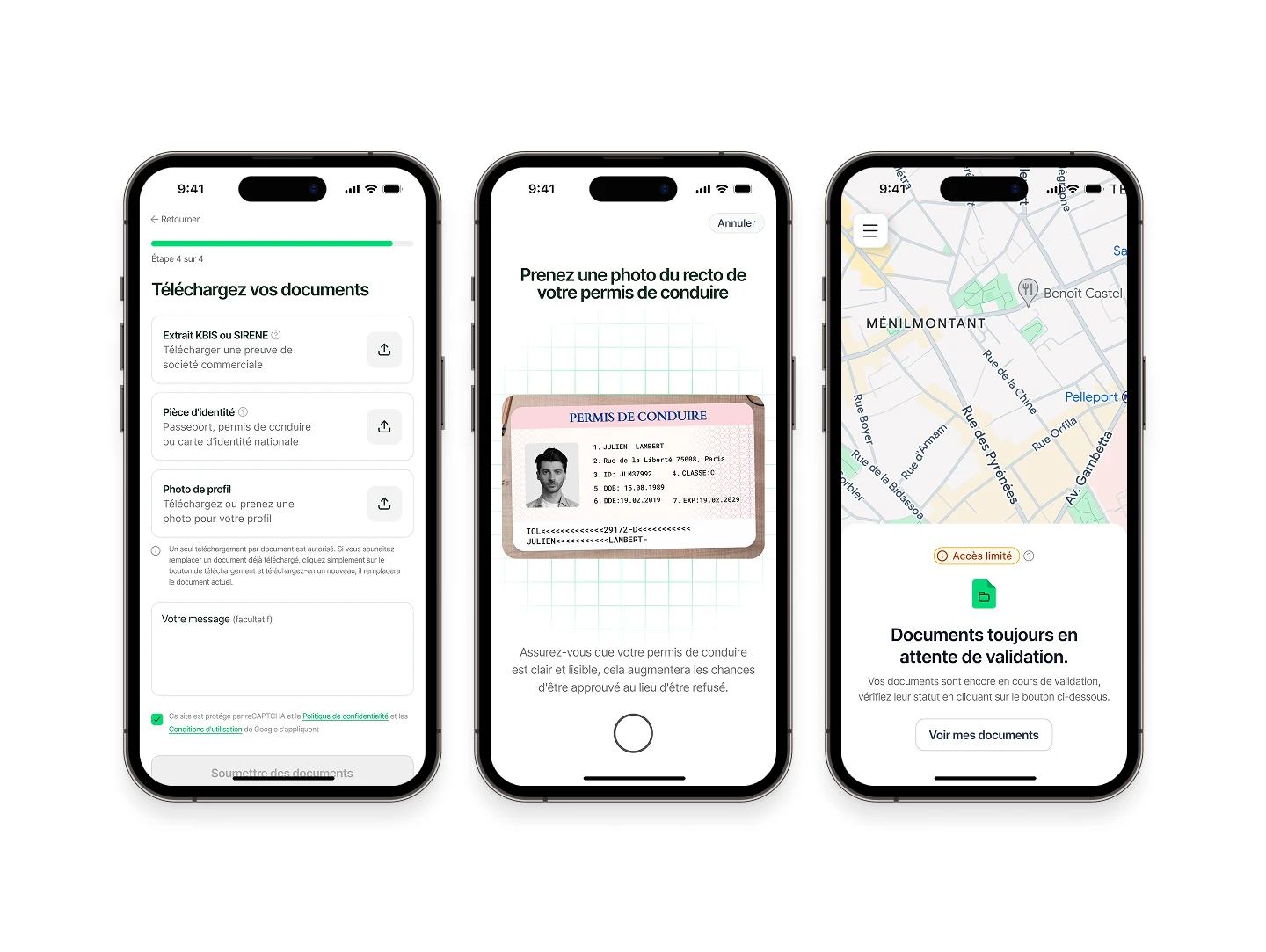
Trust by design: Before taking any job, mechanics upload documents and wait for validation.